
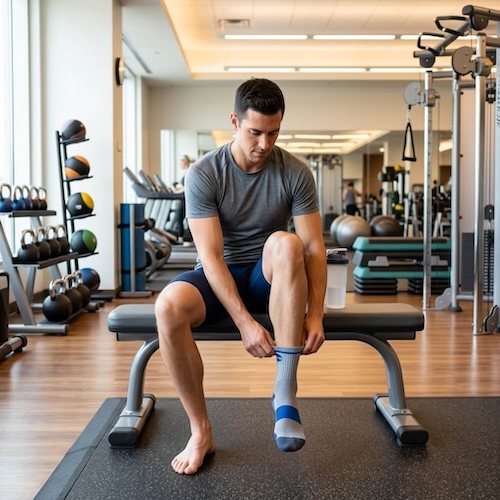
Yes, nail fungus is contagious, but it doesn’t spread as easily as a cold. It passes through direct contact with infected skin or nails, and through shared surfaces like shower floors, towels and nail tools. Most people pick it up in warm, damp places where the fungus can survive, such as gym locker rooms, pool decks and shared bathrooms.
The good news is that a few simple habits make spreading it much less likely. This guide explains how nail fungus travels, where the risks are highest at home and at the gym, and what you can do to protect yourself and the people you live with.
What causes nail fungus?
Nail fungus (the medical name is onychomycosis) is most often caused by dermatophytes. These are the same type of fungi behind athlete’s foot and ringworm. Yeasts and molds can also infect nails, though less commonly.
These fungi feed on keratin, the protein that makes up your nails and the outer layer of your skin. They get in through tiny cracks in the nail or the skin around it, then settle under the nail where it’s warm, dark and protected. That’s why an infection can be slow to show and slow to clear.
How does nail fungus spread?
Nail fungus spreads in three main ways:
- Direct contact. Touching an infected nail or infected skin, then touching your own nails or feet.
- Shared surfaces and objects. Fungal spores can survive on damp floors, towels, socks, shoes, nail clippers and files. Walking barefoot or sharing these items gives the fungus a route in.
- Spread on your own body. Athlete’s foot can move from the skin between your toes into the nails. An infected toenail can also spread to other nails, and occasionally to fingernails if you scratch or pick at it.
Exposure doesn’t guarantee infection. The fungus usually needs a way in, such as a small cut, a cracked nail or skin that stays damp, plus conditions that let it grow.
How nail fungus spreads at home
If someone in your household has nail fungus, the main risks come from shared spaces and shared items:
- Bathroom floors and shower trays. Damp surfaces where people walk barefoot are the most common route.
- Towels and bath mats. A towel used on infected feet can carry spores to the next person.
- Nail clippers, files and scissors. These can transfer fungus directly from one nail to another.
- Socks and shoes. Borrowing footwear, or mixing socks in a cool wash, can pass the fungus along.
- Bedding. The risk is lower here, but sheets can collect skin flakes if athlete’s foot is also present.
Living with someone who has nail fungus doesn’t mean you’ll catch it. Keeping these items separate and surfaces dry cuts the risk significantly.
How nail fungus spreads at the gym and pool
Gyms, pools and locker rooms are classic places to pick up foot and nail fungus. They combine bare feet, shared floors, heat and moisture. The riskiest spots are:
- Locker room and shower floors. Water pools on these, and many people walk on them barefoot.
- Pool decks and changing areas. These stay warm and wet all day.
- Saunas and steam rooms. Heat and humidity help fungi survive on benches and floors.
- Shared mats and equipment. The risk is lower, but yoga or martial-arts mats used barefoot can carry spores if they aren’t cleaned.
Your gym bag can carry the problem home too. Damp shoes, socks and towels zipped into a bag create exactly the conditions fungus likes.
Who is most at risk?
Anyone can get nail fungus, but some people are more likely to catch it or to have it spread:
- Older adults. Nails grow more slowly and thicken with age, and circulation often decreases.
- People with diabetes. Reduced circulation and nerve sensation in the feet make infections more likely and more serious.
- People with a weakened immune system. This includes people taking immune-suppressing medication.
- People who already have athlete’s foot. It’s one of the most common sources of nail infections.
- People whose feet sweat heavily or stay damp, including those who wear closed shoes all day.
- People who have damaged a nail. Injuries and cracks give the fungus a way in.
- People who regularly use communal showers, pools or gyms.
How to protect yourself and your family
These habits lower the risk of catching nail fungus, or of passing it on if you already have it.
At home
- Use your own towel, and wash towels and bath mats often in hot water.
- Keep nail clippers and files for your own use only, and clean them after each use.
- Dry your feet thoroughly, especially between the toes, after every shower.
- Clean shower floors and bathroom surfaces regularly.
- Wear socks or slippers around the house if someone has an active infection.
At the gym or pool
- Wear flip-flops or shower shoes in locker rooms, showers and on pool decks.
- Dry your feet fully before putting on socks and shoes.
- Don’t leave damp shoes and towels sealed in your gym bag. Air them out as soon as you get home.
- Wipe down mats before and after use.
Everyday foot care
- Change socks daily, or more often if your feet sweat. Moisture-wicking socks help.
- Rotate your shoes so each pair dries out between wears.
- Keep nails short and trimmed straight across.
- Treat athlete’s foot promptly so it doesn’t spread to your nails.
- If you already have nail fungus, treat it consistently. Leaving it untreated keeps it spreading to other nails and people.
When to see a doctor
Many mild cases can be managed at home, but see a doctor, dermatologist or podiatrist if:
- You have diabetes, poor circulation or a weakened immune system. Don’t self-treat in these cases.
- The nail is painful, swollen, red or leaking fluid.
- The infection is spreading to several nails or the surrounding skin.
- Over-the-counter treatment hasn’t helped after a few months of consistent use.
- You’re not sure it’s fungus. Nail psoriasis, injury and other conditions can look very similar.
A doctor can confirm the diagnosis, usually with a nail clipping or scraping, and discuss prescription options if they’re needed.
Frequently asked questions
Can nail fungus spread from toenails to fingernails? Yes, though it’s less common. Touching or picking at infected toenails and then your fingernails can transfer the fungus. Washing your hands after touching an infected nail helps prevent this.
Can I catch nail fungus from a partner? You can, mainly through shared showers, towels and bedding rather than casual contact. Using separate towels and keeping bathroom floors dry lowers the risk.
Is nail fungus contagious to children? Nail fungus is less common in children, but they can catch it through the same routes as adults. Keep their towels and nail tools separate from an infected family member’s.
Can pets give you nail fungus? Some fungi that infect pets, like the ones that cause ringworm, can spread to people’s skin. Nail infections from pets are uncommon. If your pet has patchy hair loss or scaly skin, have a vet check it.
Is nail fungus still contagious during treatment? Yes, until the infection has cleared. Keep following prevention habits throughout treatment. The damaged nail can look abnormal for months even after the fungus is gone, because it takes time to grow out.
Does nail polish spread nail fungus? Polish itself doesn’t spread it, but shared brushes and tools at salons can. Polish can also trap moisture and hide early signs, so give your nails a break if you suspect an infection.
Related reading
- Warning Signs You Need Nail Fungus Treatment
- How Nail Fungus Treatments Work
- Common Nail Fungus Treatment Mistakes
- Best Nail Fungus Treatment for 2026: Side-by-Side Review
Sources
- American Academy of Dermatology (AAD): nail fungus overview and prevention tips
- Mayo Clinic: nail fungus causes and risk factors
- Cleveland Clinic: onychomycosis overview
- NHS fungal nail infection
This article is for general information and is not a substitute for medical advice.